Buy vermögensverwaltung.eu ?
We are moving the project
vermögensverwaltung.eu .
Are you interested in purchasing the domain
vermögensverwaltung.eu ?
domain@kv-gmbh.de · 0541-91531010
Buy vermögensverwaltung.eu ?
What is a nucleophilic substitution?
A nucleophilic substitution is a type of organic reaction where a nucleophile replaces a leaving group in a molecule. The nucleophile is an electron-rich species that attacks the electrophilic carbon atom, leading to the displacement of the leaving group. This reaction is commonly seen in alkyl halides, where the halogen atom is replaced by a nucleophile such as hydroxide or amine. Nucleophilic substitutions can proceed via either an SN1 (unimolecular) or SN2 (bimolecular) mechanism, depending on the structure of the substrate and reaction conditions. **
What is a nucleophilic center?
A nucleophilic center is an atom within a molecule that has a partial or full negative charge and is therefore attracted to positively charged species. This center is rich in electrons and is capable of donating a pair of electrons to form a new chemical bond with an electrophile. Nucleophilic centers are commonly found in atoms such as oxygen, nitrogen, and sulfur, which have lone pairs of electrons available for bonding. These centers play a key role in many chemical reactions, such as nucleophilic substitution and addition reactions. **


Similar search terms for Nucleophilic
Top-Angebote
Products related to Nucleophilic:
-
Quercus Publishing Financial Joy & The Wealth Habit by Ken & Mary Okoroafor - Paperback 2 Book Set - Personal Finance & Money HabitsAchieve financial freedom with this two-book collection by Ken and Mary Okoroafor. The set includes 'Financial Joy' and 'The Wealth Habit', two paperbacks that offer a complete roadmap to financial independence. Written from the authors' lived experience, this collection combines practical budgeting steps with small daily habits that compound into lasting wealth. The authors, founders of The Humble Penny and The Financial Joy Academy, share the strategies they used to pay off their mortgage and achieve financial independence by age 34. This set is ideal for anyone starting or restarting their money journey, and provides a life-changing plan to help readers turn their finances around while still enjoying life.13,99 £*Shipping: 2,99 £Secure redirect to the provider
-
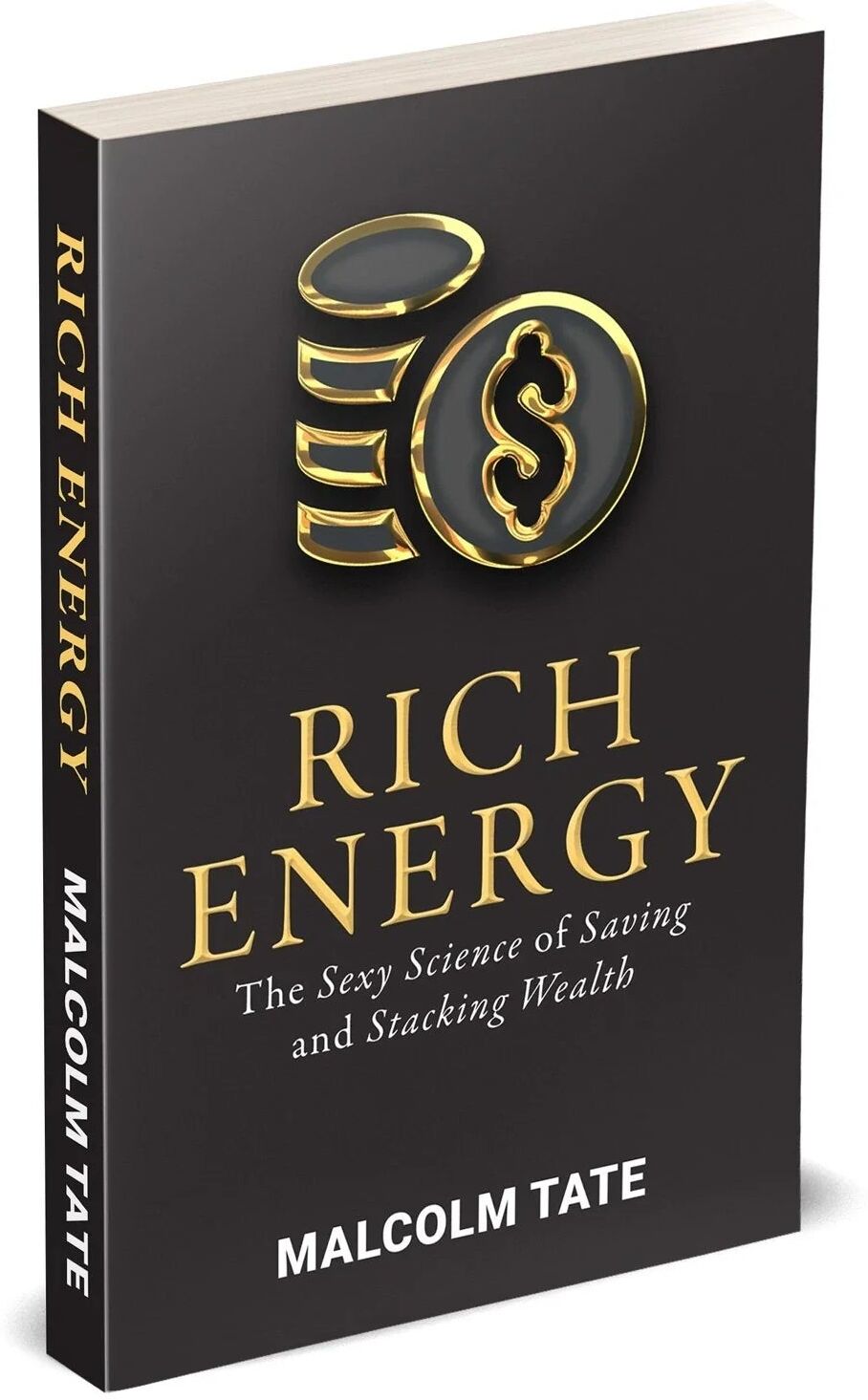
Rupa Publications RICH ENERGY: The Sexy Science of Saving & Stacking Wealth by Malcolm Tate - Paperback - Personal Finance & Money Mindset BookRich Energy: The Sexy Science of Saving; Stacking Wealth by Malcolm Tate is a contemporary take on personal finance that treats money as a mindset rather than a magic trick. Author Malcolm Tate reframes saving, spending, and investing as everyday habits rather than distant goals, giving readers a confident and accessible entry point into building lasting financial wellbeing without the jargon or judgment usually attached to money advice. This paperback book approaches personal finance as a lifestyle upgrade, focusing on the psychology behind spending triggers, the quiet discipline behind consistent saving, and the confidence that comes from understanding your financial situation. Published by Rupa Publications, this book offers a fresh perspective on managing your finances and achieving financial stability.2,99 £*Shipping: 2,99 £Secure redirect to the provider
-
John Murray One Money: Know More, Make More, Give More by Rob Moore - Personal Finance Paperback - New - Practical Guide to Building WealthA straight-talking guide to financial independence, 'Money: Know More, Make More, Give More' by Rob Moore is ideal for aspiring entrepreneurs, first-time investors, or anyone looking to change their approach to earning, saving, and growing their money. Rob Moore, a self-made multi-millionaire and property investor, distills years of experience into a practical roadmap that breaks down the real rules of the money game. He argues that financial success is not down to luck or a single big break, but rather a game with knowable rules that can be understood and followed. This brand-new paperback is a must-read for anyone looking to take control of their finances and achieve financial independence.7,99 £*Shipping: 2,99 £Secure redirect to the provider
-
Harriman House Stop Waiting, Start Investing by Ryan King - Paperback Investing Guide - Build Wealth With 10 Minutes Of Work - Personal Finance BookBuild wealth with just 10 minutes of work a day using the stock market with this practical guide. Written by finance content creator and chartered accountant Ryan King, the book offers a simple, passive, automated approach to investing that fits around a busy life. Whether you're starting from scratch or refining an existing strategy, you'll be given the tools and confidence to take control of your financial future. This book directly addresses common hesitations about investing, guiding you step by step through the fundamentals of stock market investing in clear, accessible language. Ryan King draws on his own experience and expertise to provide a beginner-friendly guide to building long-term wealth.11,99 £*Shipping: 2,99 £Secure redirect to the provider



-
Is water electrophilic or nucleophilic?
Water is considered nucleophilic because it has a lone pair of electrons on the oxygen atom, which can be donated to an electrophile in a chemical reaction. This lone pair of electrons allows water to act as a nucleophile, meaning it can attack positively charged or electron-deficient species in a chemical reaction. **
-
How does a nucleophilic substitution proceed?
A nucleophilic substitution proceeds with the attack of a nucleophile on an electrophilic carbon atom, leading to the displacement of a leaving group. The nucleophile, which is typically a negatively charged or electron-rich species, attacks the electrophilic carbon, forming a new bond and causing the leaving group to depart. This results in the substitution of the leaving group with the nucleophile, leading to the formation of a new compound. The rate and mechanism of the nucleophilic substitution can be influenced by factors such as the nature of the nucleophile, leaving group, and solvent. **
-
What are nucleophilic and electrophilic reagents?
Nucleophilic reagents are molecules or ions that are electron-rich and are attracted to electron-deficient sites in other molecules. They donate a pair of electrons to form a new covalent bond. Electrophilic reagents, on the other hand, are electron-deficient species that are attracted to electron-rich sites in other molecules. They accept a pair of electrons to form a new covalent bond. Both types of reagents play important roles in organic chemistry reactions by participating in bond formation processes. **
-
What is the Walden inversion in nucleophilic substitution?
The Walden inversion in nucleophilic substitution refers to the stereochemical outcome where the configuration of the stereocenter is inverted during the reaction. This inversion occurs due to the backside attack of the nucleophile on the electrophilic center, leading to the formation of the inverted product. The Walden inversion is a key concept in understanding the mechanism of nucleophilic substitution reactions, particularly in reactions involving chiral centers. **


Is ethanol an acid or base in nucleophilic substitution?
Ethanol is neither an acid nor a base in nucleophilic substitution. In a nucleophilic substitution reaction, ethanol can act as a solvent or a nucleophile, depending on the specific reaction conditions. As a solvent, ethanol can dissolve the reactants and facilitate the reaction, while as a nucleophile, it can donate a pair of electrons to attack an electrophilic center in the substrate molecule. Therefore, the role of ethanol in nucleophilic substitution reactions depends on the specific reaction conditions and the nature of the reactants involved. **
What is a nucleophilic substitution of the first order?
A nucleophilic substitution of the first order is a type of chemical reaction in which a nucleophile replaces a leaving group in a molecule. This reaction follows first-order kinetics, meaning that the rate of the reaction is directly proportional to the concentration of the substrate. The reaction proceeds through a transition state in which the nucleophile attacks the substrate, leading to the formation of a new product. Nucleophilic substitutions of the first order are commonly seen in organic chemistry, particularly in reactions involving alkyl halides. **
Top-Angebote
Products related to Nucleophilic:
-
Quercus Publishing The Wealth Habit by Ken & Mary Okoroafor - Sunday Times Bestseller - Paperback - Personal Finance Book for AdultsThe Wealth Habit is a guide to building lasting wealth through small, repeatable habits. Written by money experts Ken and Mary Okoroafor, the founders of The Humble Penny, this book shows that financial freedom is not reserved for the lucky few. Drawing on their own journey to financial independence, achieved debt-free by age 34, the authors offer a behaviour-first system for building wealth. This accessible and motivating read is perfect for anyone looking to change their relationship with money, one simple daily action at a time. Published by Quercus Publishing, this paperback is a Sunday Times bestselling guide to achieving financial freedom through small, achievable steps.6,99 £*Shipping: 2,99 £Secure redirect to the provider
-
Unlocking Wealth: Secrets to Getting Rich at Any Age by Rohit Sarin - Personal Finance Hardback - Aleph Book Company -Unlocking Wealth: Secrets to Getting Rich at Any Age by Rohit Sarin is a practical guide to building lasting financial security. Written by wealth management veteran Rohit Sarin, this book draws on nearly three decades of advising some of India's wealthiest families. Sarin breaks down the mindset, habits, and strategies that separate those who build real wealth from those who don't. The book offers clear, actionable guidance on smart saving habits, sound investment principles, calculated risk-taking, and the psychological traps that keep people from building real wealth. Whether you're starting your career or already managing a substantial portfolio, this hardback provides useful insights for anyone looking to build lasting financial security.2,99 £*Shipping: 2,99 £Secure redirect to the provider
-
Quercus Publishing Financial Joy & The Wealth Habit by Ken & Mary Okoroafor - Paperback 2 Book Set - Personal Finance & Money HabitsAchieve financial freedom with this two-book collection by Ken and Mary Okoroafor. The set includes 'Financial Joy' and 'The Wealth Habit', two paperbacks that offer a complete roadmap to financial independence. Written from the authors' lived experience, this collection combines practical budgeting steps with small daily habits that compound into lasting wealth. The authors, founders of The Humble Penny and The Financial Joy Academy, share the strategies they used to pay off their mortgage and achieve financial independence by age 34. This set is ideal for anyone starting or restarting their money journey, and provides a life-changing plan to help readers turn their finances around while still enjoying life.13,99 £*Shipping: 2,99 £Secure redirect to the provider
-
Rupa Publications RICH ENERGY: The Sexy Science of Saving & Stacking Wealth by Malcolm Tate - Paperback - Personal Finance & Money Mindset BookRich Energy: The Sexy Science of Saving; Stacking Wealth by Malcolm Tate is a contemporary take on personal finance that treats money as a mindset rather than a magic trick. Author Malcolm Tate reframes saving, spending, and investing as everyday habits rather than distant goals, giving readers a confident and accessible entry point into building lasting financial wellbeing without the jargon or judgment usually attached to money advice. This paperback book approaches personal finance as a lifestyle upgrade, focusing on the psychology behind spending triggers, the quiet discipline behind consistent saving, and the confidence that comes from understanding your financial situation. Published by Rupa Publications, this book offers a fresh perspective on managing your finances and achieving financial stability.2,99 £*Shipping: 2,99 £Secure redirect to the provider
-
What is a nucleophilic substitution?
A nucleophilic substitution is a type of organic reaction where a nucleophile replaces a leaving group in a molecule. The nucleophile is an electron-rich species that attacks the electrophilic carbon atom, leading to the displacement of the leaving group. This reaction is commonly seen in alkyl halides, where the halogen atom is replaced by a nucleophile such as hydroxide or amine. Nucleophilic substitutions can proceed via either an SN1 (unimolecular) or SN2 (bimolecular) mechanism, depending on the structure of the substrate and reaction conditions. **
-
What is a nucleophilic center?
A nucleophilic center is an atom within a molecule that has a partial or full negative charge and is therefore attracted to positively charged species. This center is rich in electrons and is capable of donating a pair of electrons to form a new chemical bond with an electrophile. Nucleophilic centers are commonly found in atoms such as oxygen, nitrogen, and sulfur, which have lone pairs of electrons available for bonding. These centers play a key role in many chemical reactions, such as nucleophilic substitution and addition reactions. **
-
Is water electrophilic or nucleophilic?
Water is considered nucleophilic because it has a lone pair of electrons on the oxygen atom, which can be donated to an electrophile in a chemical reaction. This lone pair of electrons allows water to act as a nucleophile, meaning it can attack positively charged or electron-deficient species in a chemical reaction. **
-
How does a nucleophilic substitution proceed?
A nucleophilic substitution proceeds with the attack of a nucleophile on an electrophilic carbon atom, leading to the displacement of a leaving group. The nucleophile, which is typically a negatively charged or electron-rich species, attacks the electrophilic carbon, forming a new bond and causing the leaving group to depart. This results in the substitution of the leaving group with the nucleophile, leading to the formation of a new compound. The rate and mechanism of the nucleophilic substitution can be influenced by factors such as the nature of the nucleophile, leaving group, and solvent. **
Similar search terms for Nucleophilic
-
John Murray One Money: Know More, Make More, Give More by Rob Moore - Personal Finance Paperback - New - Practical Guide to Building WealthA straight-talking guide to financial independence, 'Money: Know More, Make More, Give More' by Rob Moore is ideal for aspiring entrepreneurs, first-time investors, or anyone looking to change their approach to earning, saving, and growing their money. Rob Moore, a self-made multi-millionaire and property investor, distills years of experience into a practical roadmap that breaks down the real rules of the money game. He argues that financial success is not down to luck or a single big break, but rather a game with knowable rules that can be understood and followed. This brand-new paperback is a must-read for anyone looking to take control of their finances and achieve financial independence.7,99 £*Shipping: 2,99 £Secure redirect to the provider
-
Harriman House Stop Waiting, Start Investing by Ryan King - Paperback Investing Guide - Build Wealth With 10 Minutes Of Work - Personal Finance BookBuild wealth with just 10 minutes of work a day using the stock market with this practical guide. Written by finance content creator and chartered accountant Ryan King, the book offers a simple, passive, automated approach to investing that fits around a busy life. Whether you're starting from scratch or refining an existing strategy, you'll be given the tools and confidence to take control of your financial future. This book directly addresses common hesitations about investing, guiding you step by step through the fundamentals of stock market investing in clear, accessible language. Ryan King draws on his own experience and expertise to provide a beginner-friendly guide to building long-term wealth.11,99 £*Shipping: 2,99 £Secure redirect to the provider
-
Plata Publishing Why the Rich Are Getting Richer by Robert T. Kiyosaki & Tom Wheelwright - Paperback - Personal Finance & Wealth-Building Non Fiction for AdultsWhy the Rich Are Getting Richer is a thought-provoking follow-up to Rich Dad Poor Dad, co-written by Robert T. Kiyosaki and CPA Tom Wheelwright. This paperback book strips away financial jargon to explain, in plain language, why the wealth gap keeps widening and why traditional schooling rarely teaches real financial education. Aimed at adults ready to question conventional money advice, it blends Kiyosaki's storytelling with Wheelwright's technical expertise on tax and business structures, offering a fresh, accessible entry point into the wider Rich Dad philosophy for readers of all financial backgrounds. The book argues that the traditional formula of saving money, buying a home, and investing in a diversified stock portfolio no longer guarantees financial security, particularly for those who depend solely on a salary. Kiyosaki and Wheelwright examine how tax strategies and business structures can impact financial success, providing a valuable resource for anyone looking to improve their financial literacy.8,99 £*Shipping: 2,99 £Secure redirect to the provider
-
Cornerstone/Wilco Atomic Habits, The Richest Man in Babylon & Think and Grow Rich – 3 Book Collection Set Personal Finance, Wealth & Self-Development ClassicsTransform your habits, mindset, and financial future with this powerful 3-book collection set, featuring three of the most influential books on success, wealth, and personal growth. This essential bundle includes: Atomic Habits by James Clear – Discover how small, consistent habits can lead to extraordinary results and lasting success. The Richest Man in Babylon by George S. Clason – Learn timeless principles of saving, investing, and building wealth through simple financial wisdom. Think and Grow Rich by Napoleon Hill – Unlock the mindset and strategies behind achievement, success, and financial independence. Together, these books provide a complete guide to building better habits, mastering your finances, and developing a success-driven mindset. Ideal for entrepreneurs, professionals, students, and anyone looking to improve their life. Why Readers Love This Collection: Includes 3 bestselling self-help and finance classics Covers habits, wealth-building, and success mindset Practical, timeless advice for real-life results Suitable for beginners and experienced readers Perfect gift for motivation and personal growth A must-have bundle for anyone serious about success, this collection offers proven strategies for achieving long-term growth and financial freedom.14,99 £*Shipping: 2,99 £Secure redirect to the provider
-
What are nucleophilic and electrophilic reagents?
Nucleophilic reagents are molecules or ions that are electron-rich and are attracted to electron-deficient sites in other molecules. They donate a pair of electrons to form a new covalent bond. Electrophilic reagents, on the other hand, are electron-deficient species that are attracted to electron-rich sites in other molecules. They accept a pair of electrons to form a new covalent bond. Both types of reagents play important roles in organic chemistry reactions by participating in bond formation processes. **
-
What is the Walden inversion in nucleophilic substitution?
The Walden inversion in nucleophilic substitution refers to the stereochemical outcome where the configuration of the stereocenter is inverted during the reaction. This inversion occurs due to the backside attack of the nucleophile on the electrophilic center, leading to the formation of the inverted product. The Walden inversion is a key concept in understanding the mechanism of nucleophilic substitution reactions, particularly in reactions involving chiral centers. **
-
Is ethanol an acid or base in nucleophilic substitution?
Ethanol is neither an acid nor a base in nucleophilic substitution. In a nucleophilic substitution reaction, ethanol can act as a solvent or a nucleophile, depending on the specific reaction conditions. As a solvent, ethanol can dissolve the reactants and facilitate the reaction, while as a nucleophile, it can donate a pair of electrons to attack an electrophilic center in the substrate molecule. Therefore, the role of ethanol in nucleophilic substitution reactions depends on the specific reaction conditions and the nature of the reactants involved. **
-
What is a nucleophilic substitution of the first order?
A nucleophilic substitution of the first order is a type of chemical reaction in which a nucleophile replaces a leaving group in a molecule. This reaction follows first-order kinetics, meaning that the rate of the reaction is directly proportional to the concentration of the substrate. The reaction proceeds through a transition state in which the nucleophile attacks the substrate, leading to the formation of a new product. Nucleophilic substitutions of the first order are commonly seen in organic chemistry, particularly in reactions involving alkyl halides. **
* All prices are inclusive of VAT and, if applicable, plus shipping costs. The offer information is based on the details provided by the respective shop and is updated through automated processes. Real-time updates do not occur, so deviations can occur in individual cases. ** Note: Parts of this content were created by AI.